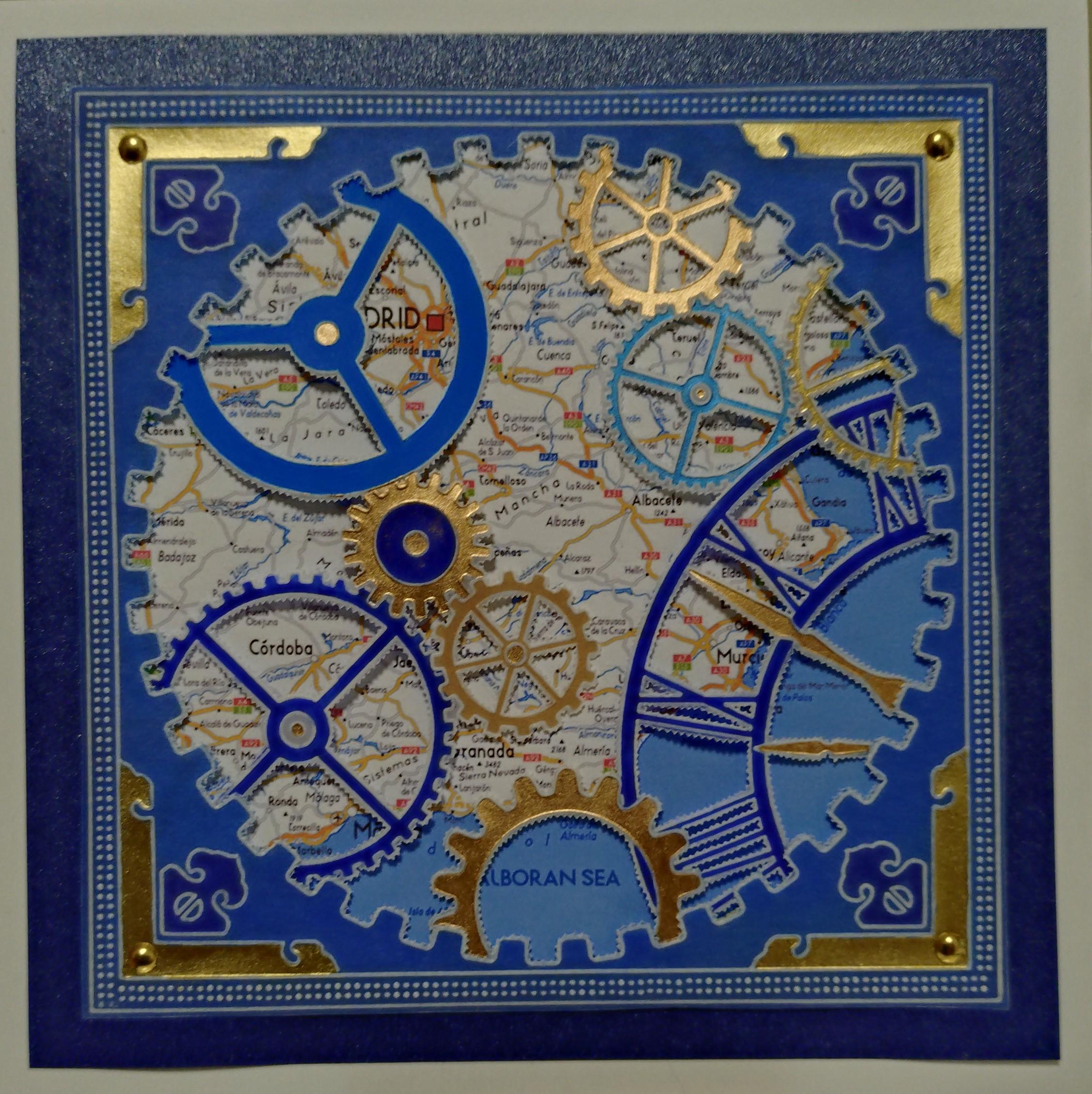
All about parchment
Parchment was developed about 500BC, in Bergama, Turkey. Bergama is Pergamum in Latin and so the art is also known as Pergamano. There was a shortage of papyrus, so parchment originally was thinned goat skin, but these days, its made of wood pulp. Although in the beginning, people used parchment primarily as a surface on which to write, parchment craft appeared in Europe in the 15th or 16th centuries. At that time, parchment craft entailed creating lace-like designs on sheets of paper. In those early days, most of the designs were religious in nature and had significant Catholic themes. The invention of the printing press in 1445 also limited use as printing was mechanised. However, parchment craft experienced a revival during the 18th century, when the handwork became more intricate and decorative, with wavy borders and perforations. The craft also moved to South America at this time where it was used to make gifts for girls to celebrate their first Communion and remained a popular craft.